online + in-person 10-hour Professional Development Course
Working with High Tone Neuro Clients:
A holistic approach to
decreasing tone & spasticity
Stop guessing where to start with your high tone neuro clients.
Learn a clear framework to integrate autonomic nervous system regulation, interoceptive and proprioceptive inputs, fascial training principles, and graded movement progressions to improve movement quality and therapeutic engagement.




High neurological tone is a frustrating side effect of spinal cord injury, both for the individual and for trainers to work with.
Trainers are often stuck on how to “lift” this tone to bring out true motor abilities and progress in function. Traditional strategies for tone management are “band-aid solutions,” minimizing tone for a short period before it returns in (sometimes larger) full force.
Is there a better way to address neurological tone after SCI at its root for longer lasting relief?
This course examines the relationship between sensory inputs, environmental factors, nervous system regulation, and states of readiness that may influence muscle tone and functional performance.
Inspired by the developments and positive impacts of spinal cord stimulators, the ZN High Tone protocol aims to replicate these effects through non-pharmaceutical and non-tech nervous system regulation strategies.
✔️ Trauma-informed principles to exercise and therapeutic intervention.
✔️ Regional and global muscle tension analysis for clinical decision-making and programming choices.
✔️ Autonomic nervous system regulation strategies to support body ease and system readiness for therapeutic intervention.
✔️ Proprioceptive and interoceptive inputs that prime motor output and performance.
✔️ Exercise training parameters to improve muscle connective tissue elasticity.
✔️ Graded movement progressions to build tolerance and resiliency to triggering positions.

-
High neurological tone (hypertonicity) and spasticity are common consequences of spinal cord injury and other neurological conditions and can significantly influence movement quality, exercise performance, and functional mobility.
Changes in the ability to perceive and respond to the environment following damage to sensory pathways can have a significant impact on how individuals move. In addition, changes in muscle and connective tissue elasticity associated with sudden or gradual changes in activity, including periods of disuse, can influence muscle tone and function. For rehabilitation professionals, understanding these changes and selecting appropriate sensory inputs and exercise strategies are important components of a comprehensive approach to tone management.
This course examines the relationship between sensory inputs, environmental factors, nervous system regulation, and states of readiness that may influence muscle tone and functional performance.
The course introduces general principles of vagus nerve support and nervous system regulation to create conditions that support readiness for therapeutic intervention. Participants will also explore the impact of appropriate sensory inputs to improve muscle tone and motor output.
Exercise selection includes floor-based exercises and positioning strategies that may reduce the likelihood of triggering synergistic spasms, graded exercise progressions to support tolerance of positions or movements that may trigger spasticity, and specific exercise training parameters that support muscle and connective tissue elasticity.
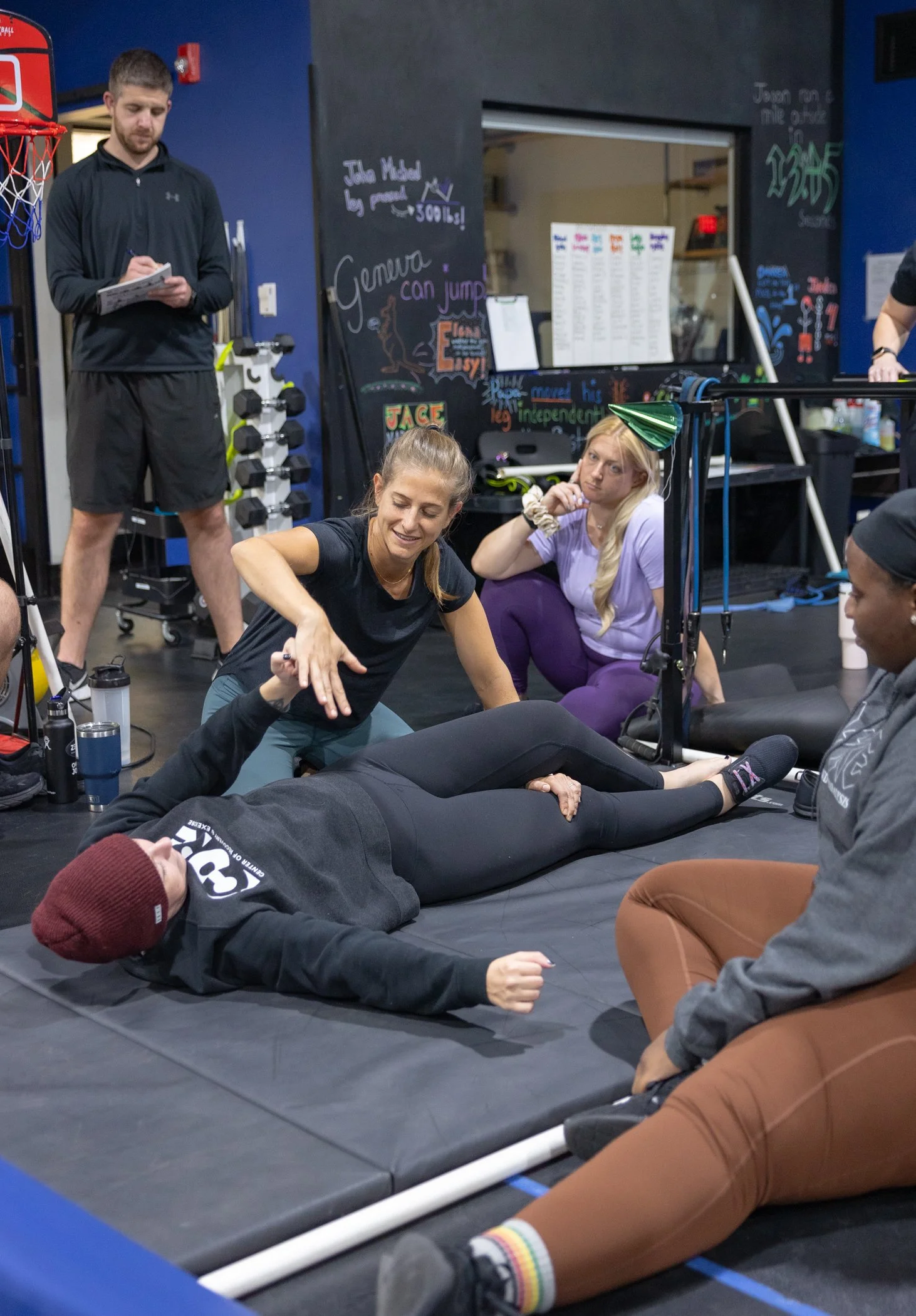
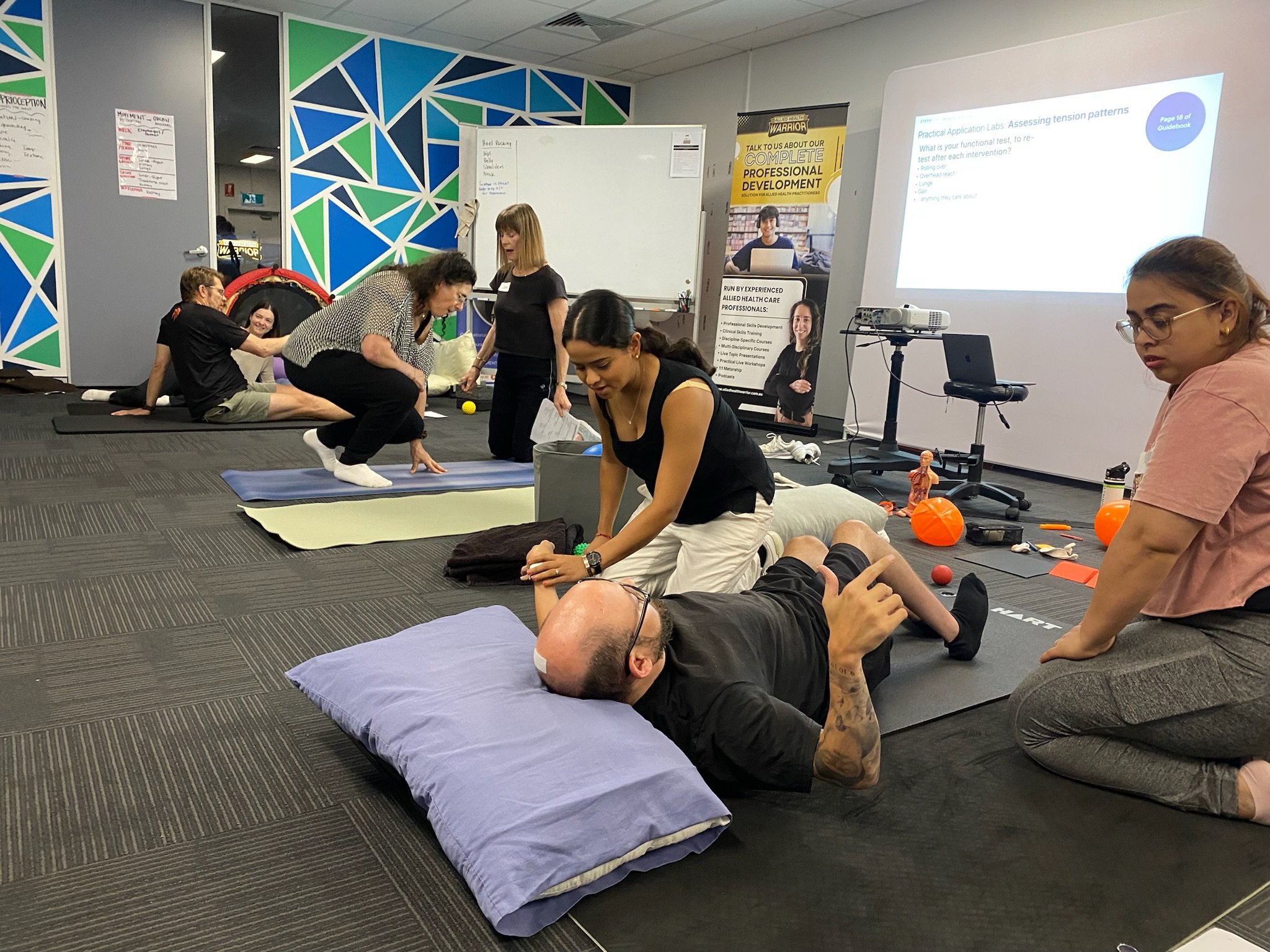
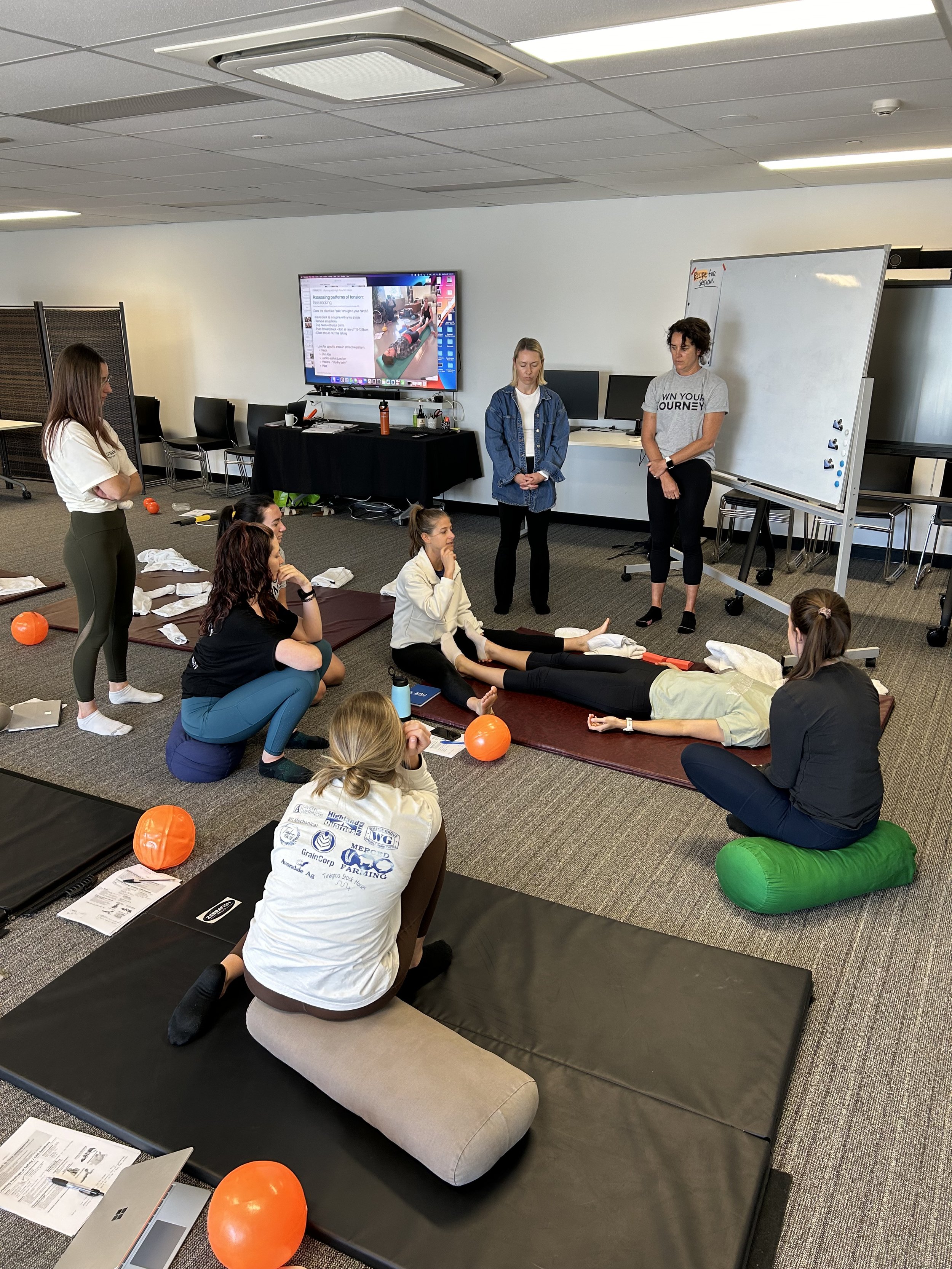
Throughout the course, participants will experience these strategies firsthand and then apply them directly with demonstration clients with SCI and other neurological conditions. This practical application provides an opportunity to observe movement, make programming decisions, and apply exercise and movement strategies while seeing the clinical reasoning process unfold in real time.
-
Physical Therapists and Physical Therapy Assistants
Occupational Therapists
Exercise Physiologists
Activity-Based Therapy professionals
Pilates teachers
Yoga teachers
Strength and Conditioning Specialists
Caretakers/partners of SCI
Working in practice settings:
Out-patient rehab
In-patient rehab
Acute care
Activity-based therapy
Home therapy services
This course content is not intended for use by any participants outside the scope of their license or regulation.
Instruction Level: Intermediate
This course assumes 1-2 years of experience in working with spinal cord injury clients/patients. If you are new to this demographic, please complete the online Groundwork workshop to familiarize yourself with SCI before attending this course.
-
At the conclusion of this program, the learner will be able to:
Identify common changes in muscle and connective tissue elasticity associated with spinal cord injury and disuse, and consider how these changes may influence mobility, movement efficiency, and fluidity.
Analyze movement patterns to identify areas of increased tension, restricted mobility, altered coordination, and changes in muscle tone.
Select targeted sensory, proprioceptive, and environmental inputs to support movement efficiency, fluidity, and readiness for therapeutic exercise in individuals experiencing high tone or spasticity.
Select exercise parameters, loading strategies, and movement progressions that support tissue mobility and elasticity in individuals with spinal cord injury and other neurological conditions.
Apply graded exercise progressions and modifications when introducing new positions or movements that may increase spasticity or muscle tone, supporting participation and performance during therapeutic exercise.
Apply trauma-informed principles to exercise and therapeutic intervention for individuals with spinal cord injury and neurological conditions experiencing high tone or spasticity.
-
Online Course Module (3 hours): asynchronous study of recorded lectures reviewing relevant background information & research to support presented interventions. View sample of Online Course Portal here.
A Knowledge Check/Quiz confirms completion & and understanding before participation in the in-person labs.
Live, in-person (7 hours)
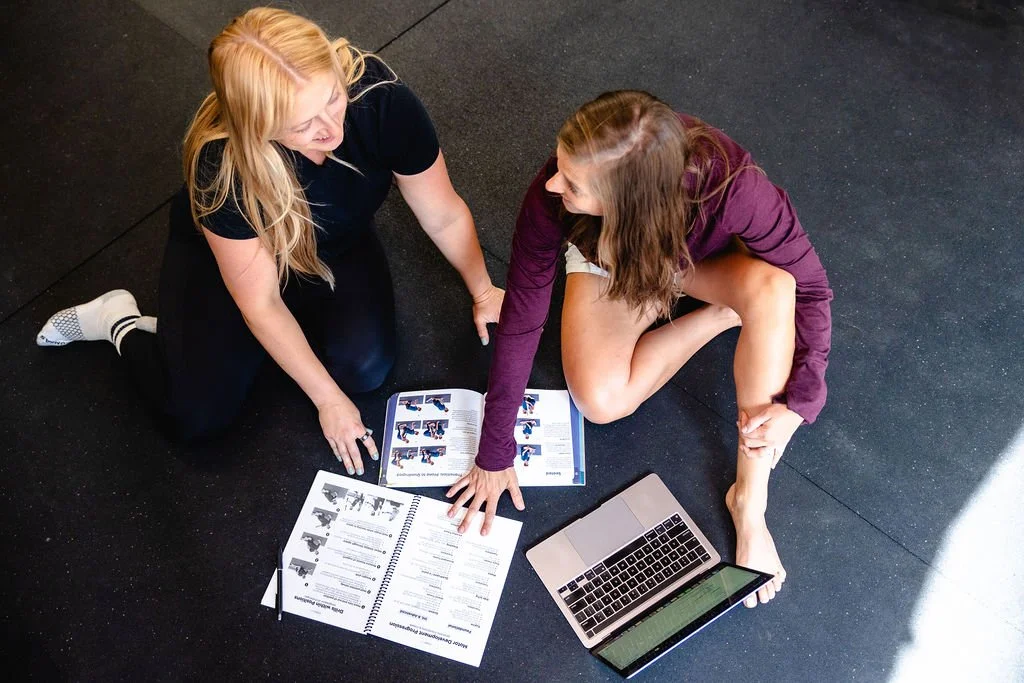
30 page printed guidebook with diagrams, photos and prompts for clinical reasoning and reflection.
In-person Lecture/didactic with powerpoint including videos of case examples.
Clinician first-hand experiences & partner lab (kinesthetic learning).
Demonstrations on participants and client models.
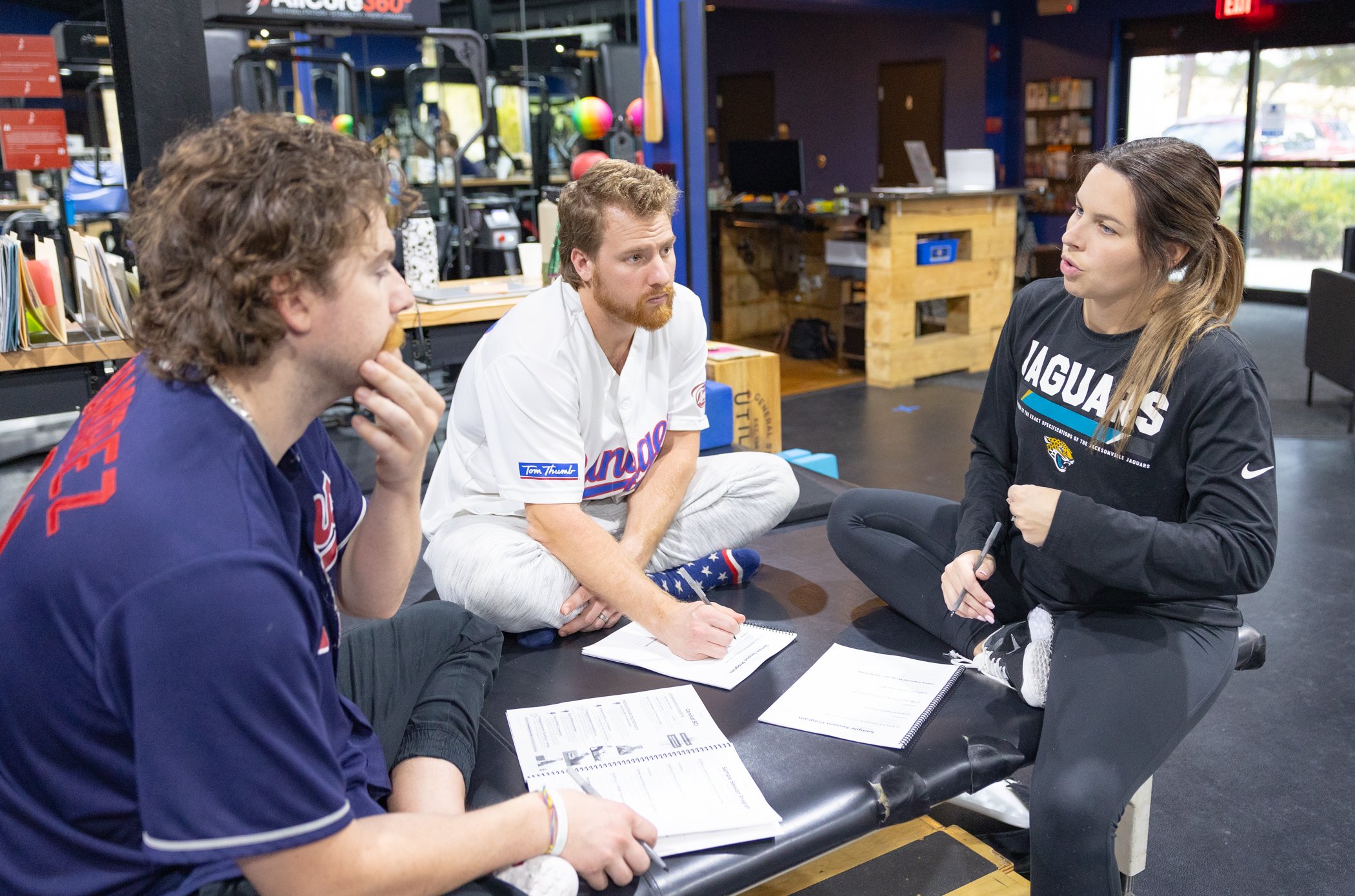
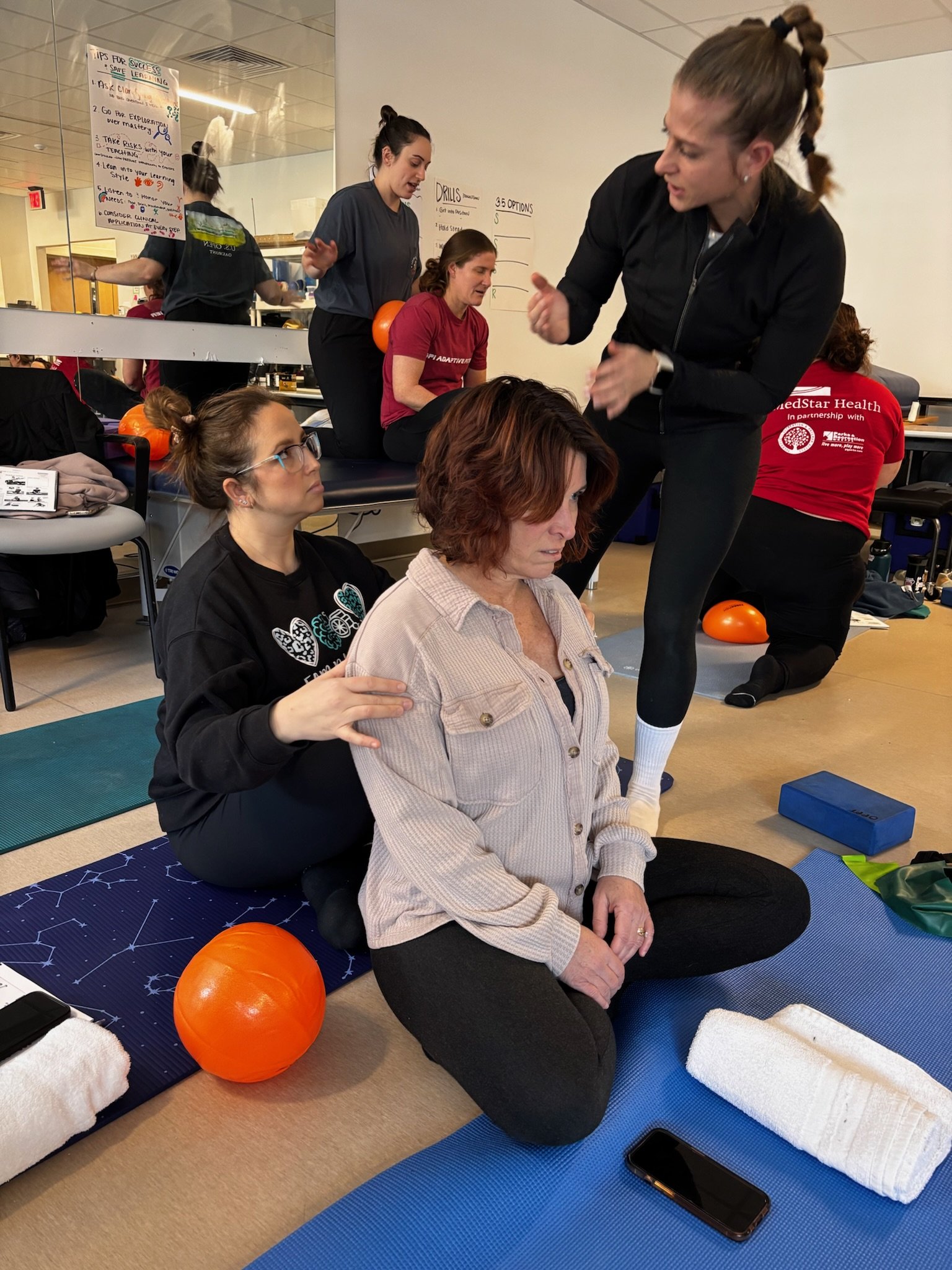
Hands-on practical application/lab in small groups (4:1) with client models.
Case discussion and presentation of lab findings from participants.
-
This course is highly interactive - and ACTIVE - experience.
Real understanding, competence and confidence comes from full in-person immersion. Come ready for a lot of movement, partner labs, and hands-on practice.
SMALL LABS w/ REAL NEURO CLIENTS:
1 hour observation lab + 2 hours of hands on lab practice with real demo clients provides opportunity for real-time troubleshooting, observation of the quick outcomes from optimal cueing and builds confidence for execution after the course.
HIGH TOUCH GUIDANCE:
Due to the extensive hands-on learning components of this course, we maintain a strict student-to-faculty ratio of 16:1 to provide a high-touch learning experience and comply with many state APTA standards. A Course/Lab Assistant is added to the course for 16+ participants.
DIVERSE LEARNING STYLES:
I strive to deliver the curriculum for a variety of learning styles:
Kinesthetic (feeling)
Auditory (discussion)
Visual (PowerPoint & client demonstrations)
Experiential (hands on practice)
Theory/Intellectual (printed Guidebook)
THE PRINTED GUIDEBOOK:
A 25-page printed and bound Guidebook hosts the concepts, theory, and exercises with plenty of space for clinical reasoning notes, application to YOUR clients and reflection prompts to establish deeper integration of the material.
CONTINUED SUPPORT & COMMUNITY:
All course participants are invited to stay connected through the Professional Community social network - a place to ask questions and share client case success.
Participants can also join Office House events, scheduled quarterly, to discuss client cases and gain insights from other professionals in the ZN Network. View the reply of one of our events here.
-
…how Learning Outcomes are measured and course completion is evaluated.
Earning all CEU’s/Contact Hours require the following:
ONLINE LEARNING MODULE:
The 3-hour online module (asynchronous) must be completed prior to the in-person course.
An eleven question Knowledge Check quiz must be completed with a 100% passing score before participation of the in-person learning.
LIVE ATTENDANCE:
Course participants must be present for all in-person presentation & lab (full day, 7 hours). There is no partial credit available for this course.
COURSE COMPLETION:
Full participation in the Hands On Lab is required. Lab groups will present case findings, interventions and clinical reasoning for programming to the entire group as the final “Course Completion” check.
CERTIFICATE OF COMPLETION:
Upon completion of group presentations, participants certificates are signed by the course presenter. The certificate in the back of the Course Guidebook is not valid unless signed by the presenter in their signature color.
COURSE & PRESENTER EVALUATION:
All participants are asked to provide evaluation and feedback using the form (see included in syllabus). Evaluations are reviewed by the presenter and Course Lab Assistant (CLA) for future curriculum development. Participants can also request additional resources to support their learning in this form.
ABOUT THIS COURSE
CONTINUEING EDUCATION
for neuro rehab professionals
This Course offers
10
CONTACT HOURS FOR CONTINUING EDUCATION
Applications for CE Approval have been submitted and are waiting for notice. This information should be updated by August 30. 2026.
-
Application is submitted and waiting for approval.
States that honor reciprocity*
GEORGIA
OREGON
OHIO
NORTH CAROLINA
NORTH DAKOTA
… your state?
Check your state’s reciprocity: Google search “[your state] physical therapy association CE provider course approval”. See syllabus above to submit for credits.
*Please check with your state board on reciprocity details before enrolling.
-
Please check with your state board on reciprocity with APTA approved courses before enrolling.
-
Not yet approved.
Learn more here: https://nationalpilatescertificationprogram.org
-
Submit the provided course syllabus to petition for CECs directly with your accreditation board. This is quite an easy process with the right paperwork! I’m happy to assist.
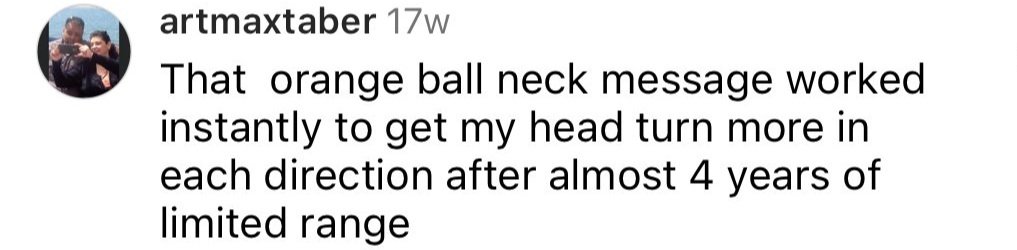
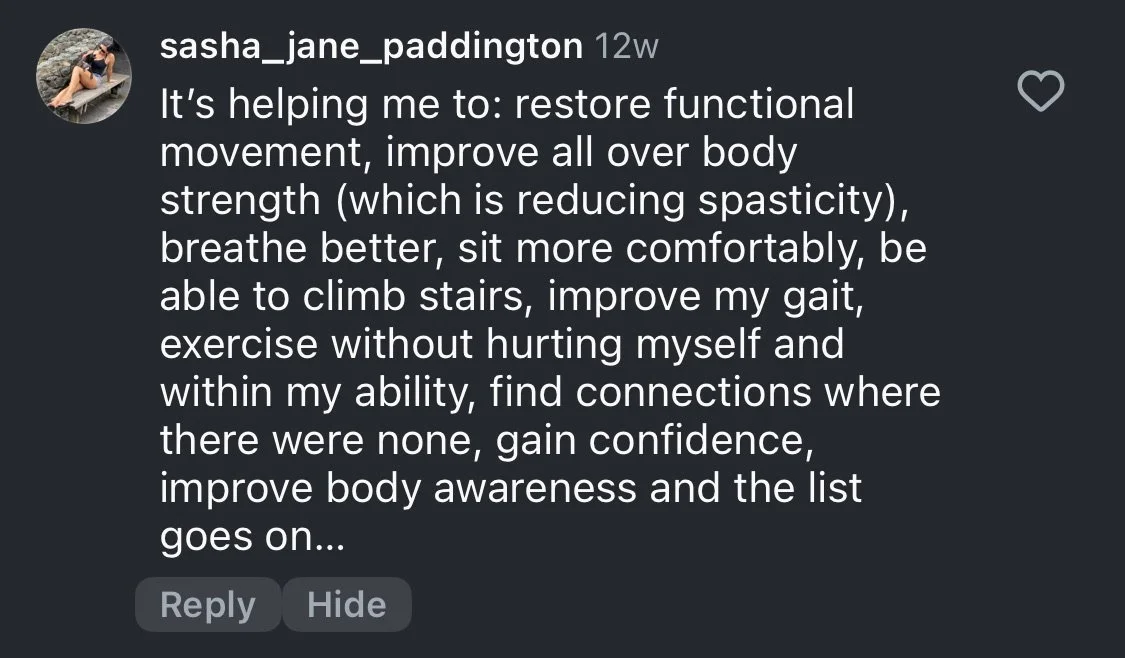
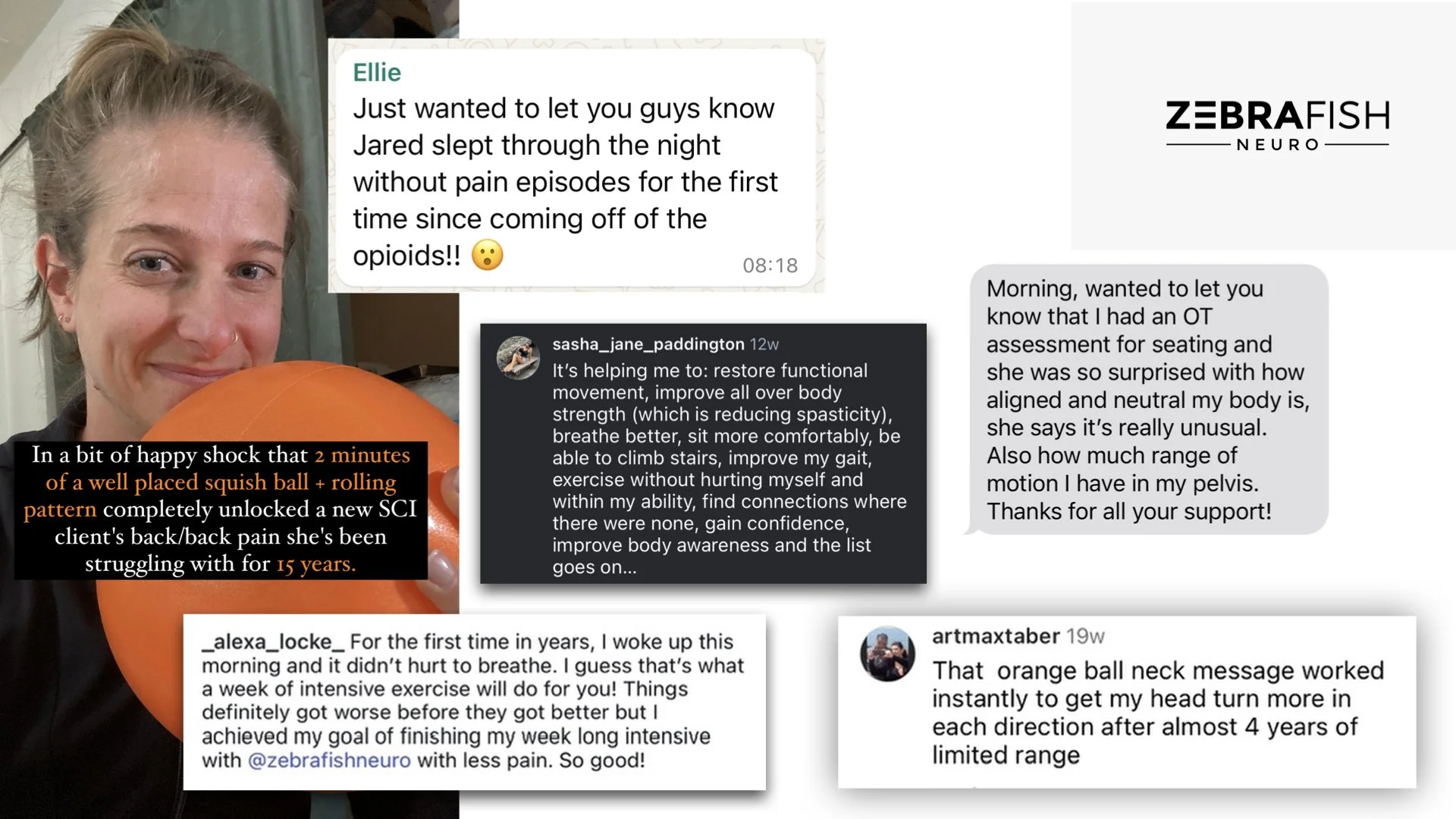
What course grads are saying about
Zebrafish Neuro Professional Development:
About the instructor
Stephanie Comella has been working with spinal cord injury and neurological populations since 2011, beginning her career in an activity-based therapy clinic before discovering the powerful carryover of Pilates equipment in neuro rehabilitation.
She pursued formal Pilates training through Balanced Body in 2015 and earned her comprehensive certification with NCPT (the official certifying body in Pilates) in 2016, completing advanced study across all major apparatus, including the Reformer, Trapeze Table/Tower, Chair, Barrels, and Mat.
Stephanie went on to develop a Pilates-based neuro pilot program within a boutique studio setting, where she refined her approach to adapting classical Pilates for individuals with neurological conditions. Her work bridges the gap between traditional Pilates instruction and the complex needs of neuro rehab, emphasizing accessibility, adaptability, and clinical application.
She later self-published From the Ground Up, a 300-page resource outlining her neuro recovery Framework with an extensive library of adapted Pilates exercises designed for real-world implementation (download a sample here).
Her work has also been featured in a collaborative case report publication exploring the use of Pilates-based programming to support gait recovery in an L1–L3 spinal cord injury, contributing to the growing evidence supporting Pilates in neurological rehabilitation.
Today, Stephanie uses Pilates equipment as a primary tool to facilitate movement through kinesthetic learning with her neuro clients — helping individuals develop dynamic stabilization, reflexive control, and integrated mobility.
Stephanie has taught physical therapists, occupational therapists and other neuro rehab professionals how to integrate pilates principles and safely use pilates equipment into their clinical practice all over the world since 2023.
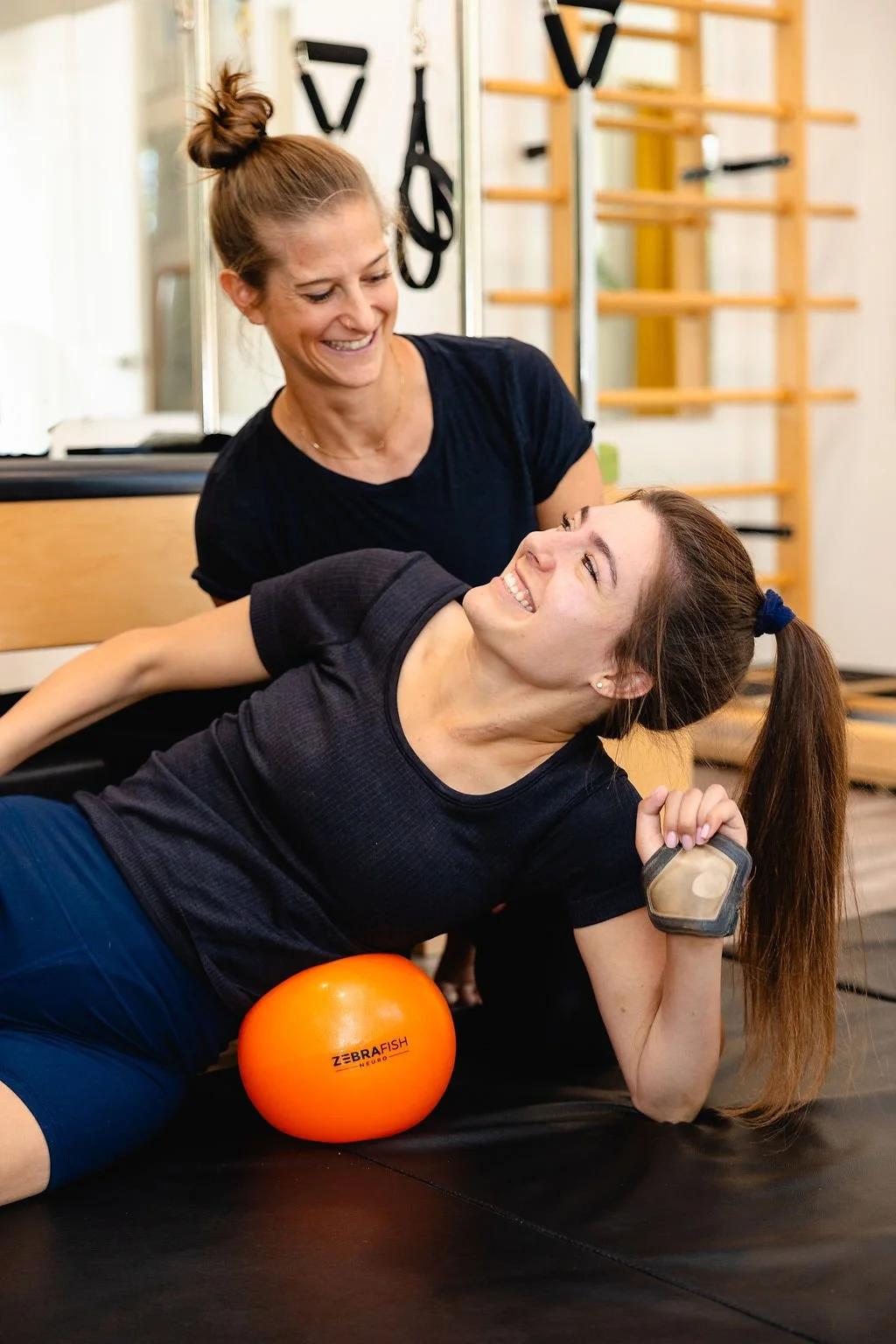
Your course may also have a Course/Lab Assistant!
Due to the extensive hands-on learning components of this course, we maintain a strict student-to-faculty ratio of 16:1 to provide a high-touch learning experience and comply with many state APTA standards.
A Course/Lab Assistant is added to the course for 16+ participants.
FAQs
about the High Tone Workshop
-
This workshops offers 10 Contact Hours of ConEd. As of July 2026, I have submitted CE Approval Applications and waiting to hear notice of approval.
HOW TO GET CE CREDITS through individual application: Google search “[State] physical/occupational therapy course approval” and you’ll probably be taken right to the application site. Take the syllabus (found here) and apply for credits directly through your state board. It’s usually free to submit (or a very small fee) + a simple form to fill out.
For ACSM, NASM, ACE, ESSA, NPCP etc.:
Submit the provided course syllabus to petition for CECs directly with your accreditation board. This is quite an easy process with the right paperwork! I’m happy to assist.
-
These modules are not created as a “part 1” and “part 2” - they are the same course and created to be consumed as one learning experience.
You must complete both the online curriculum and in-person labs to receive a certificate of completion and the 10 continuing education credits.
-
Due to the hands-on, interactive nature of this curricuum, attending in-person for the Practical Application/Labs is imperative. There is no online/remote learning option for this part of the curriculum.
And let’s be real - the only way to really build confidence in your skills, especially with neuro clients/patients, is through hands-on learning… Don’t shortchange your education - your clients deserve the best!
-
We encourage you to transfer your registration to a colleague if you cannot make it.
If you are unable to transfer your registration, cancellations will result in a refund minus a 20% administration fee. We are unable to credit your registration to a future course.
Thank you in advance for understanding.
-
Yes, please! We will need “model” bodies to work with, and what better way to learn than on your own clients.
Have your client/patient learn more about this experience + submit an application here.
-
If you work or are interested in working with neuro and SCI patients, this course is for you.
I have had all types of allied health professionals attend this course and get so much out of it - both from the curriculum and from collaborating with all the other attending professionals:
Acute care Physical Therapist or Occupational Therapist
In-patient Physical Therapist or Occupational Therapist
Recreational Therapist / adaptive rec
Massage therapist
Yoga teacher
Personal Trainer
Neuro exercise specialist
I love having multiple disciplines in the course so we can establish a common continuum of care through our client’s journey.
-
One of the best ways to support your person (and ultimately save so much $ and time in the long run!) is by thinking like a rehab professional yourself.
Yes, there is a bit of anatomy in the course, but I teach it very simply - pretty much as I would teach it to a client - so it’s easy to follow.
I’ve had caregivers attend the course and then implement the strategies with great success.
Plus, I’m always there to side-bar or review deeper if you need!
-
Yes, we can arrange private in-person courses for your team. Learn more about hosting private events here.
Pre-Requisites
CURRICULUM BREAKDOWN
Participants must have at least 6 months of working directly with spinal cord injury or neurological conditions, or complete the 8-hour online self-paced The Groundwork course to get up to speed on SCI.
Online Learning
3 hours, asynchronous
Recorded video/powerpoint lectures introduce:
Client cases that prompted curiosity and initial development of this curriculum - before and after transformations using this sensory input and movement approach to high tone management.
Relevant anatomy and physiology of systemic changes that occur after SCI and neurological injury that contribute to muscle tone and spasticity.
Discussion on the different nervous system states and how they influence movement behavior and muscle tone.
Introduction to Neuroception - how we perceive threat through our sensory systems: visual, vestibular, interoception, proprioception.
A Knowledge Check Quiz will check for understanding and completion of the Online Module before participation in the in-person labs.
The Online Course Module is hosted on Teachable: view the introduction here.

Morning Didactic & Partner Labs
3.5 hours
Observation and analysis of mobility and tone patterns in participants (partner labs).
Sensory inputs that support interoception and proprioception, resulting in decreased tone patterns.
Autonomic nervous system regulation strategies, including breathwork and cranial nerve stimulation.
Floor-based exercises that support movement fluidity.
Graded exercise progressions to support tolerance of positions or movements that may trigger spasticity
Exercise training parameters that support muscle and connective tissue elasticity.

Demonstration
Lab
1 hour
Demonstration of discussed interventions on a real neuro client in real time.
Movement observation and analysis, interventions and clinical reasoning for why specific interventions were chosen for this particular case.

Small Group Lab
& Case Presentations
2.5 hours
Movement observation, analysis and interventions with real neuro clients in small groups (4:1).
Documentation of intervention outcomes and analysis of effect for individual cases.
Presentations from small groups sharing observations, interventions, clinical reasoning and outcomes during Labs.
Course wrap up: Feedback Forms & Signing Certificates of Completion
These courses and workshops have supported SCI rehab Continuing Education and Professional Development for the teams at: