Pilates Equipment
for Neuro Rehab
An introductory clinical pilates training for neuro rehab professionals
Learn how to confidently use Pilates equipment in neuro rehab -
whether you’re starting with the basics or ready to deepen your clinical pilates practice.
11 hours of Continuing Education
Taught by a Comprehensively Trained Pilates Instructor
with 15+ years experience working with neuro & SCI.
So you got a reformer for your clinic -
but you’re using it as a glorified leg press and you don’t know what else to do with it…
Pilates equipment can be a game-changer for supporting your SCI & Neuro client’s movement discovery and development - when you know how to use it properly.
It’s time to learn more about how your pilates equipment can bring value to your program.
✔️ Learn new exercises, specifically adapted for neuro, SCI & wheelchair users
✔️ Safe implementation
✔️ Leverage equipment settings to challenge, support and provide feedback
✔️ Clinical reasoning for programming using a clear framework
✔️ Immediate application with your case load
✔️ Deliver more engaging sessions!
This workshop is for you if:
A physical therapist working in neurological rehabilitation.
Treating individuals with spinal cord injury, stroke, or other neurological conditions.
Working in a clinic that has access to Pilates equipment (Reformer, Tower, Trapeze, or Chair).
Getting into teaching Pilates - but struggled to apply it clinically.
Currently using the equipment, but feel like you’re only scratching the surface; you default to the same few exercises (e.g., Leg press).
Wanting more confidence in how to set up, modify, and progress exercises for different levels of injury or function.
Looking for a clearer framework for deciding what to use, when, and why.
Interested in improving patient engagement and motor learning through more intentional use of equipment.
Workshop Curriculum
Learn how to use your Pilates equipment as a clinical tool.
-
An online, asynchronous workshop designed to help physical therapists use Pilates equipment with greater clarity, confidence, and clinical intent.
Most Pilates education focuses on exercises—what to do, how to sequence, and how to cue. But in a clinical setting, that often leaves a gap between knowing exercises and knowing how to apply them.
This workshop bridges that gap by helping you understand the equipment and, more importantly, how to use it clinically.
In this series, you’ll learn how to leverage key elements of Pilates equipment—such as spring tension, line of pull, suspension, and dynamic support—to address real movement challenges in neurological populations.
Each week, we’ll progress through the equipment (Tower, Reformer, Trapeze) in the same order it’s introduced in my clinical practice, covering:
Equipment features that support kinesthetic learning and motor control
Tried-and-true Pilates exercises adapted for both non-ambulatory and ambulatory neuro populations
Practical modifications and progressions based on presentation and goals
Effective use of equipment settings to influence load, support, and motor learning
Safety considerations, common errors, and strategies for guarding and spotting
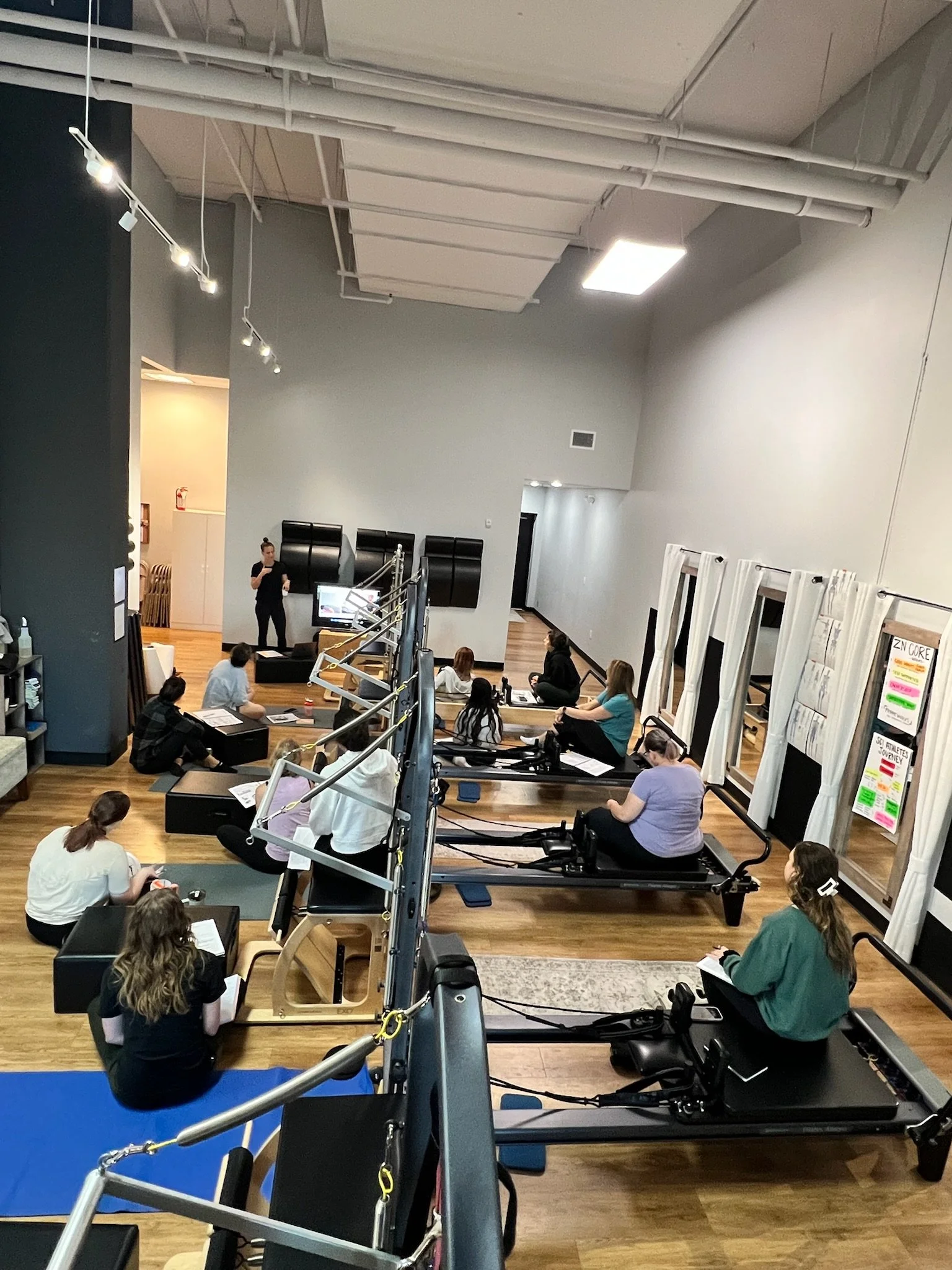
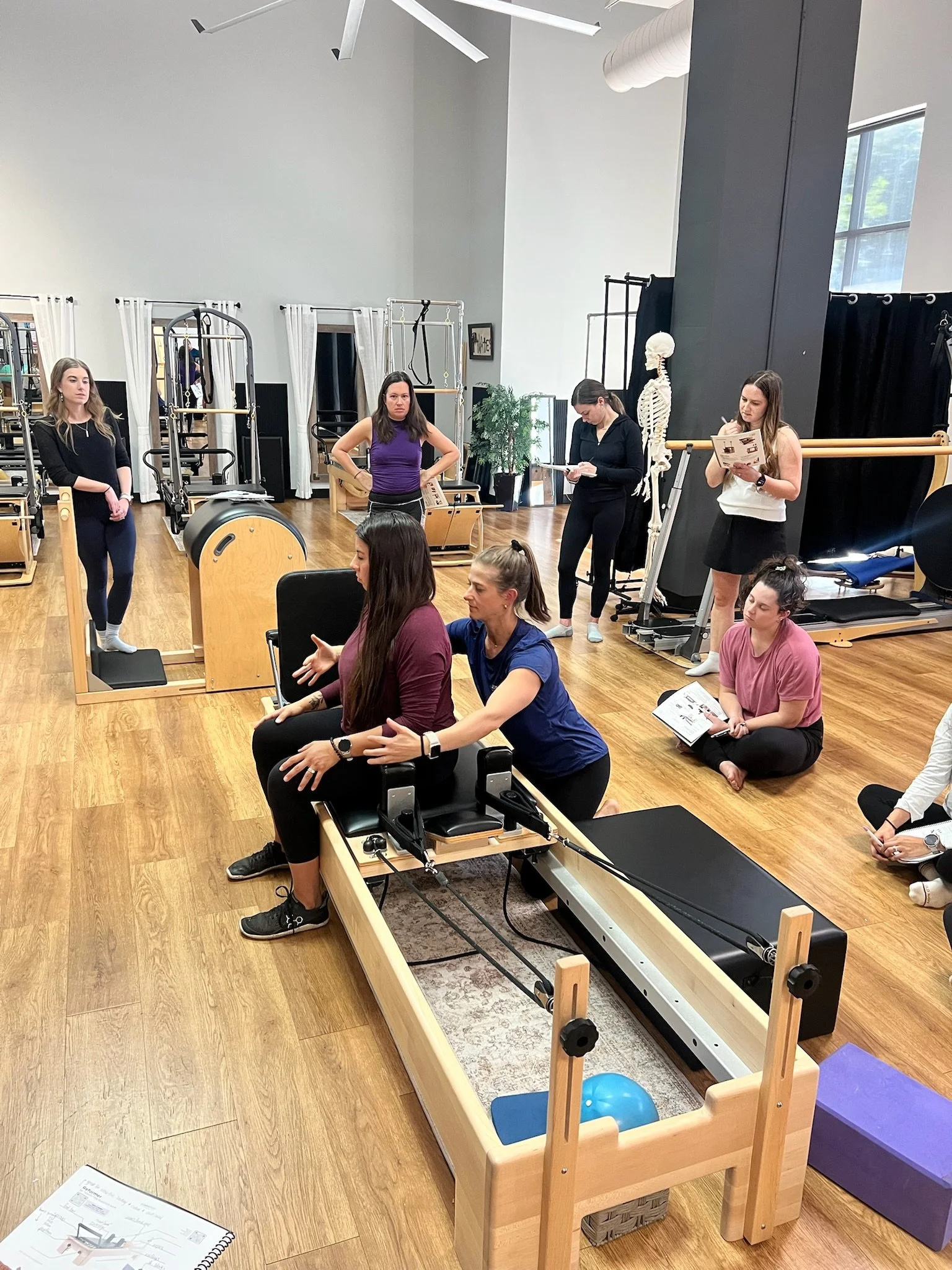
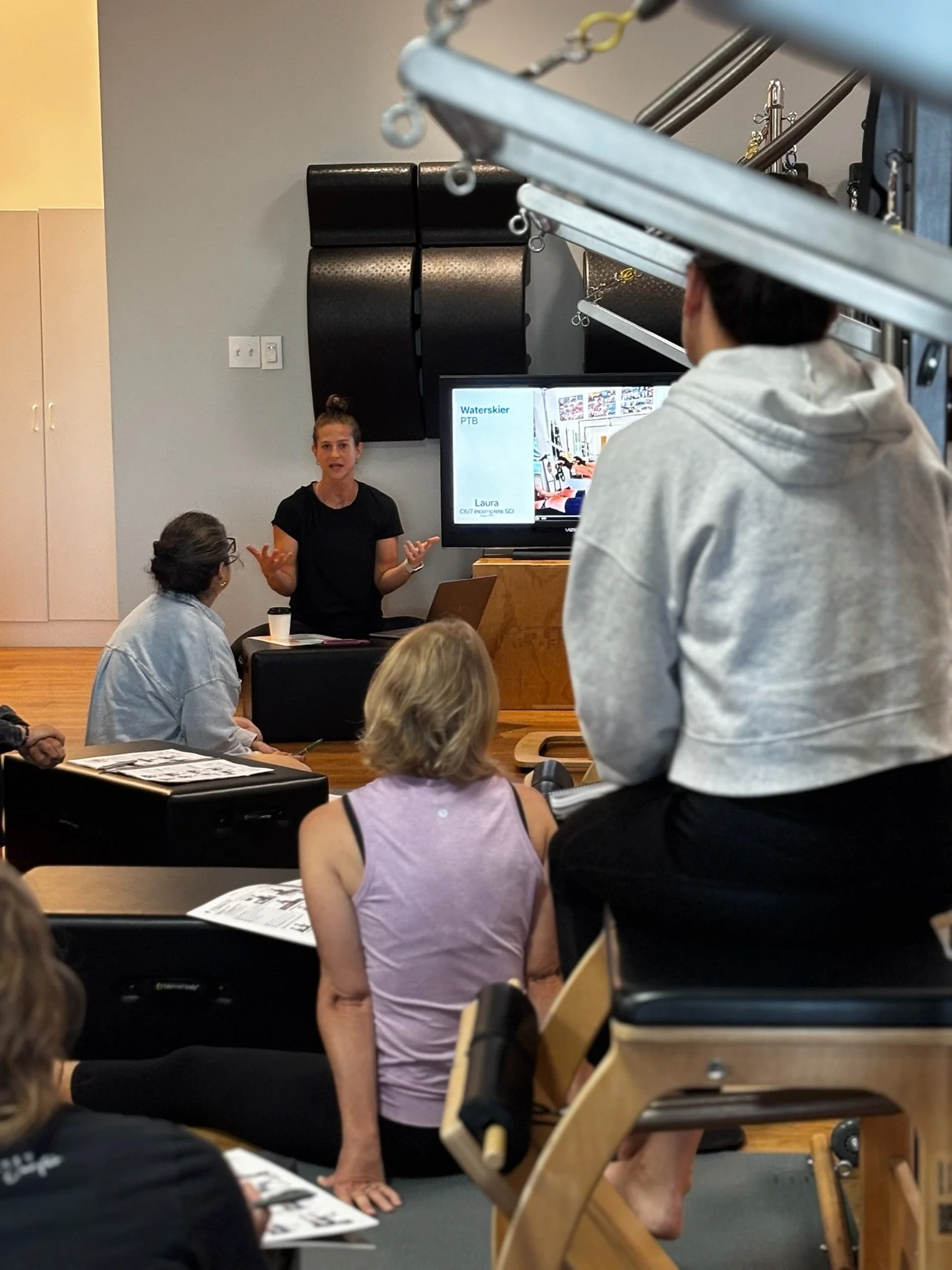
Live demonstrations, guided practice, case discussions, and co-treatment sessions are paired with pre-recorded content and a printed guidebook to support implementation.
By the end of the series, you’ll have a clear framework for using Pilates equipment in neuro rehab—and the confidence to apply it in your next treatment session.
» Scroll to the bottom of this page for more curriculum breakdown by module.
-
This workshop is designed for neuro rehab clinicians who want to use Pilates equipment more intentionally in a rehabilitation setting.
You’ll benefit from this course if you are:
A physical therapist working in neurological rehabilitation.
Treating individuals with spinal cord injury, stroke, or other neurological conditions.
Working in a clinic that has access to Pilates equipment (Reformer, Tower, Trapeze, or Chair).
Getting into teaching Pilates - but struggled to apply it clinically.
Currently using the equipment, but feel like you’re only scratching the surface; you default to the same few exercises (e.g., Leg press).
Wanting more confidence in how to set up, modify, and progress exercises for different levels of injury or function.
Looking for a clearer framework for deciding what to use, when, and why.
Interested in improving patient engagement and motor learning through more intentional use of equipment.
-
After completing this workshop, you can expect to:
Use Pilates equipment with greater confidence and clinical clarity.
Move beyond a limited set of familiar exercises and expand your treatment options.
Make more intentional decisions around setup, resistance, and positioning
Adapt exercises more effectively across different neurological cases.
Recognize and correct compensatory patterns more efficiently.
Improve patient engagement through this dynamic, responsive intervention.
Increase utilization of the equipment already available in your clinic.
Apply what you learn immediately in your next treatment session.
-
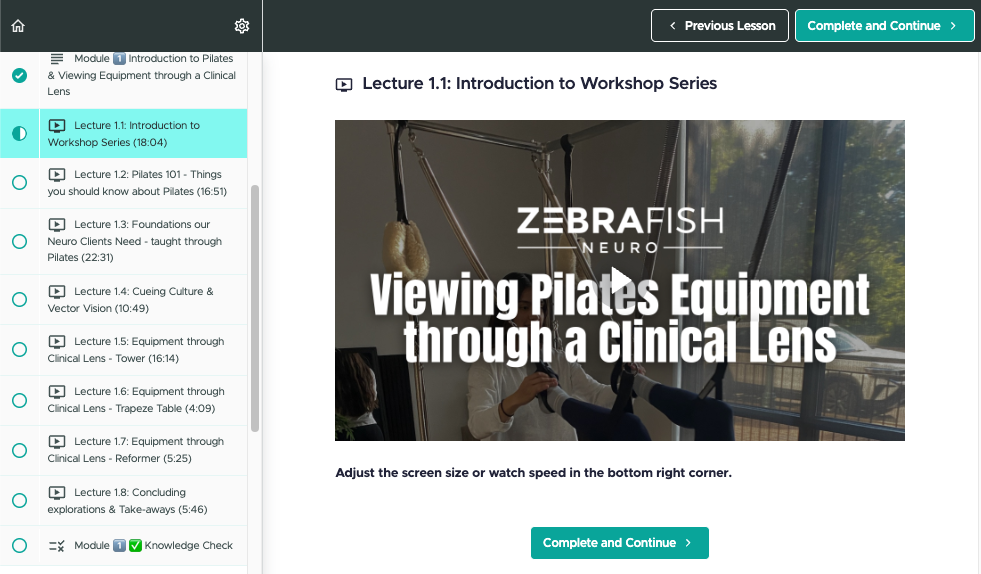
11 hours of content divided into 5 Modules hosted in an online course portal (through Teachable).
Module 1: Introduction to Pilates & Equipment
Module 2: Neuro Applications using the Pilates Tower
Module 3: Neuro Applications using the Reformer, part 1 - seated exercises
Module 4: Neuro Applications using the Trapeze Table/overhead canopy
Module 5: Neuro Applications using the Reformer, part 2 - advanced and standing exercises
Each module includes:
Equipment overview
Tips and tricks to set-up equipment specifically for neuro clients
Equipment feature dissection
Exercise breakdown and demonstration
Personal Practice Pilates class using the equipment
Knowledge checks
» Ask questions directly in the course portal for prompt responses directly from the course presenter, Stephanie.
The course portal is available for participants to revisit forever (or until the internet dies).
Hosted on

About the instructor
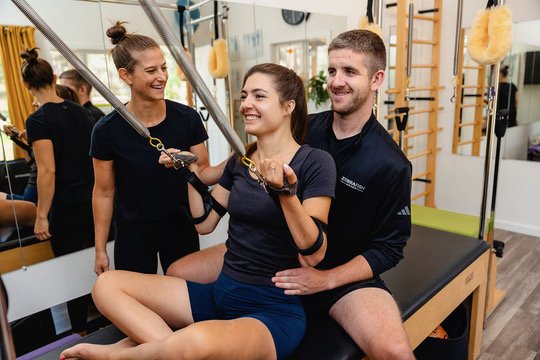
Stephanie Comella has been working with spinal cord injury and neurological populations since 2011, beginning her career in an activity-based therapy clinic before discovering the powerful carryover of Pilates equipment in neuro rehabilitation.
She pursued formal Pilates training through Balanced Body in 2015 and earned her comprehensive certification with NCPT (the official certifying body in Pilates) in 2016, completing advanced study across all major apparatus, including the Reformer, Trapeze Table/Tower, Chair, Barrels, and Mat.
Stephanie went on to develop a Pilates-based neuro pilot program within a boutique studio setting, where she refined her approach to adapting classical Pilates for individuals with neurological conditions. Her work bridges the gap between traditional Pilates instruction and the complex needs of neuro rehab, emphasizing accessibility, adaptability, and clinical application.
She later self-published From the Ground Up, a 300-page resource outlining her neuro recovery Framework with an extensive library of adapted Pilates exercises designed for real-world implementation (download a sample here).
Her work has also been featured in a collaborative case report publication exploring the use of Pilates-based programming to support gait recovery in an L1–L3 spinal cord injury, contributing to the growing evidence supporting Pilates in neurological rehabilitation.
Today, Stephanie uses Pilates equipment as a primary tool to facilitate movement through kinesthetic learning with her neuro clients — helping individuals develop dynamic stabilization, reflexive control, and integrated mobility.
Stephanie has taught physical therapists, occupational therapists and other neuro rehab professionals how to integrate pilates principles and safely use pilates equipment into their clinical practice all over the world since 2023.
A note on Pilates Teacher credentials
Comprehensive Pilates certifications are both rigorous and highly specialized. Training typically includes 20–60 hours of instruction on each piece of equipment, along with extensive supervised teaching practice.
A full comprehensive certification often requires 500+ hours of education and hands-on experience, with an investment ranging from $10,000–$15,000—reflecting the depth of knowledge required to safely and effectively apply this method.
Interested in digging into pilates certifications for yourself?
Find Stephanie’s recommended Pilates Teacher Training schools here.
FAQs
about this online Pilates workshop series
-
This workshop is not yet approved for ConEd units, however, when/if it is approved, you will be granted a course code for submission (after passing a knowledge check/quiz).
A certificate of completion is provided and may be submitted (along with the supplied workshop syllabus) for individual application of education credits. This application can be found directly on the state board website for a nominal submission fee.
-
No. This course is designed for clinicians who may have limited or informal exposure to Pilates equipment. You’ll learn the fundamentals of how the equipment works and how to apply it clinically.
-
Access to equipment during the live calls is strongly recommended for personal practice/follow-along, but not required to attend the calls. If you won’t have access, you’ll still gain a clear framework and understanding of how the equipment is used in a clinical setting.
You should plan to work through the demonstrations and personal development classes with your equipment at a later time.
-
We’ll have TWO modules on the reformer, and the other modules provide essential understanding in movement foundations to effectively use the Reformer.
The equipment is designed as a system/suite and work off each other!
-
Because of the redunancy within the Pilates method, and the equipment, there are ways to apply reformer concepts in other environments.
You’ll be learning concepts that springboard your creativity this way.
-
Forever, or until the internet dies.
-
This is the beauty of pilates and movement foundations - its where EVERYONE should start in their recovery journey - low impact, controlled environments for focused learning.
I’ll share applications for the most common neuro conditions: hemiparesis, paraplegia, quadraplegia and general challenges with high muscle tone, sensation and stability.
Curriculum Breakdown - 5 Modules
Each module progresses through the equipment (Tower, Reformer, Trapeze) in the same order it’s introduced in my clinical practice, covering:
1️⃣ Pilates Foundations: How to Think with the Equipment
Build the foundation for using Pilates equipment as a clinical tool - not just an exercise system.
How Pilates differs from traditional strengthening in a rehab setting.
Equipment overview - Reformer, Tower and Trapeze Table - through a clinical lens.
The feature-based framework: springs, suspension, support, resistance, guided pathways.
How to match equipment features to patient needs and movement goals.
How to begin thinking in terms of objective → setup → outcome.
2️⃣ Tower & Push-Through Bar: Upper extremity & Postural Control
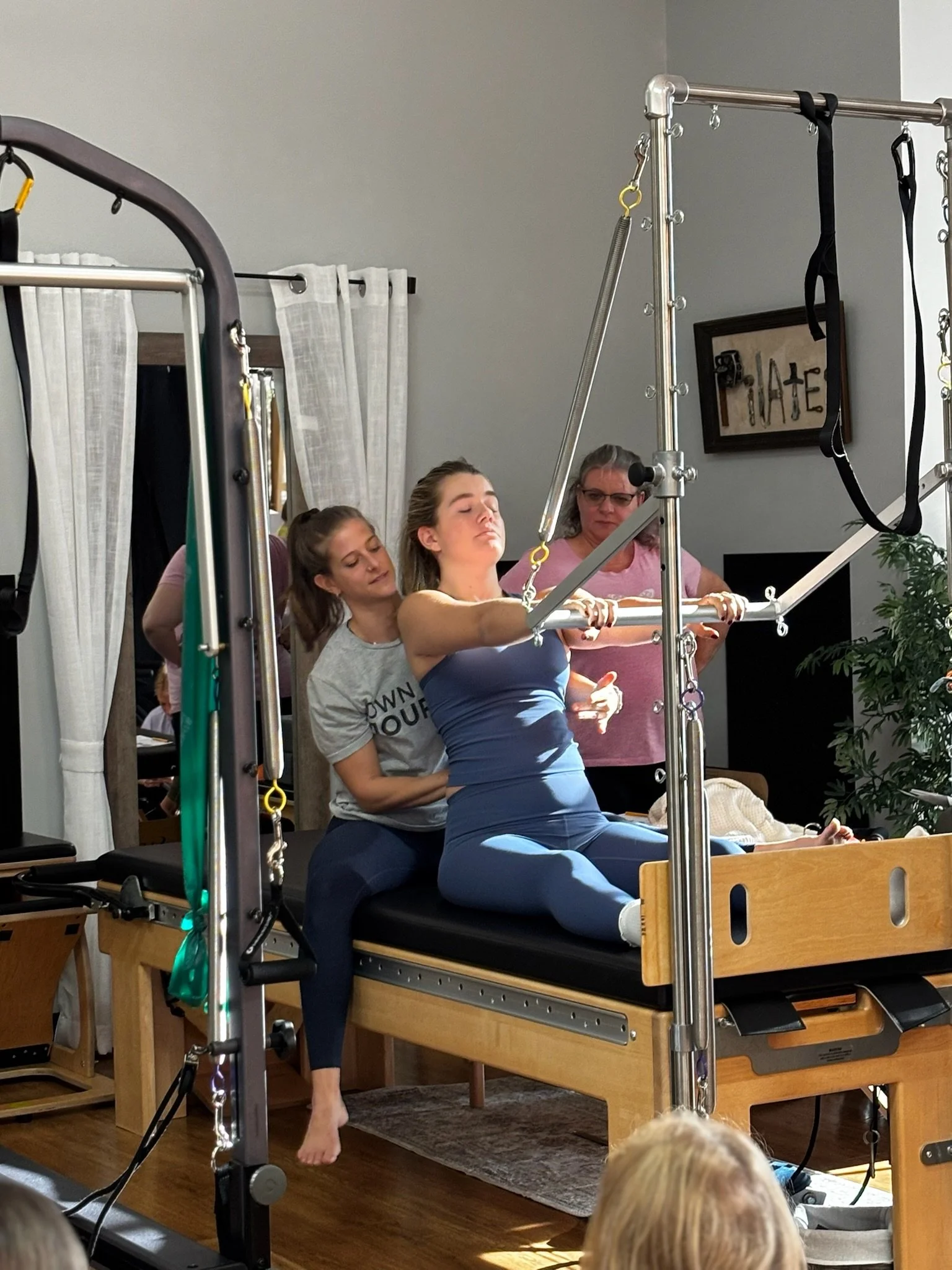
Learn how to use the Tower and Push-Through Bar to support postural alignment, trunk control, and prepare for more advanced exercises on the Reformer.
Using the Push-Through Bar for mobility, feedback, and integration.
Building foundational upper extremity mobility and dynamic control of the shoulder (programming for cervical SCI)
Introducing postural stability requirements for success on the Reformer (programming for Thoracic SCI)
+ 50 min Pilates class for yourself, featuring Tower/Push-through Bar exercises
3️⃣ Reformer, part 1: Dynamic Postural Control & Stability
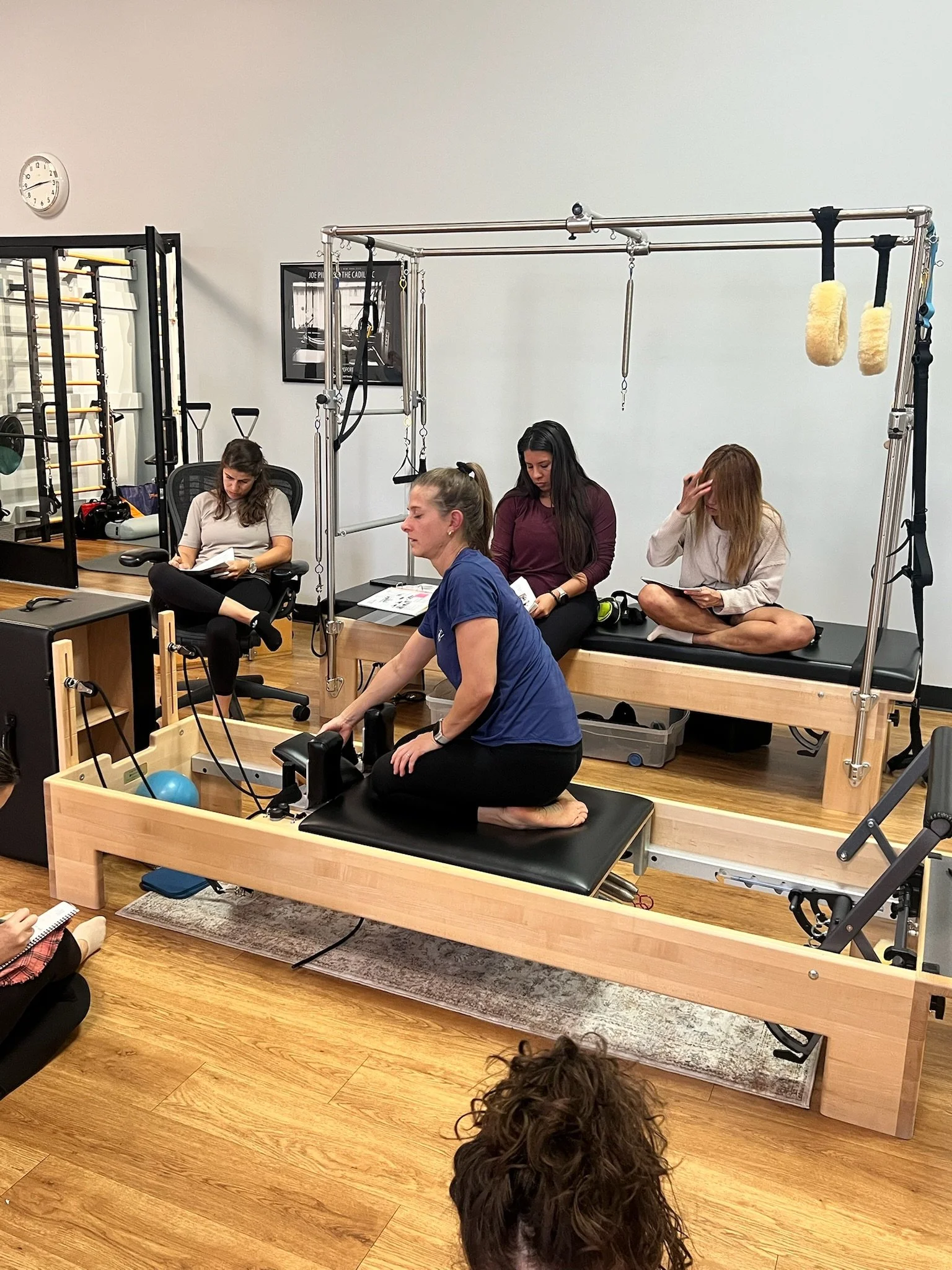
Take the foundations learned with the tower onto the dynamic Reformer to challenge postural stability with a moving carriage and strap work.
Using the moving carriage to challenge postural stability, through seated strapwork
Spotting techniques and cueing for improved success.
Progressions to get here safely using the footbar.
+ 50 min Pilates class for yourself, featuring Seated exercises and Strap work on the Reformer
4️⃣ Trapeze Table: using suspension to make positions available
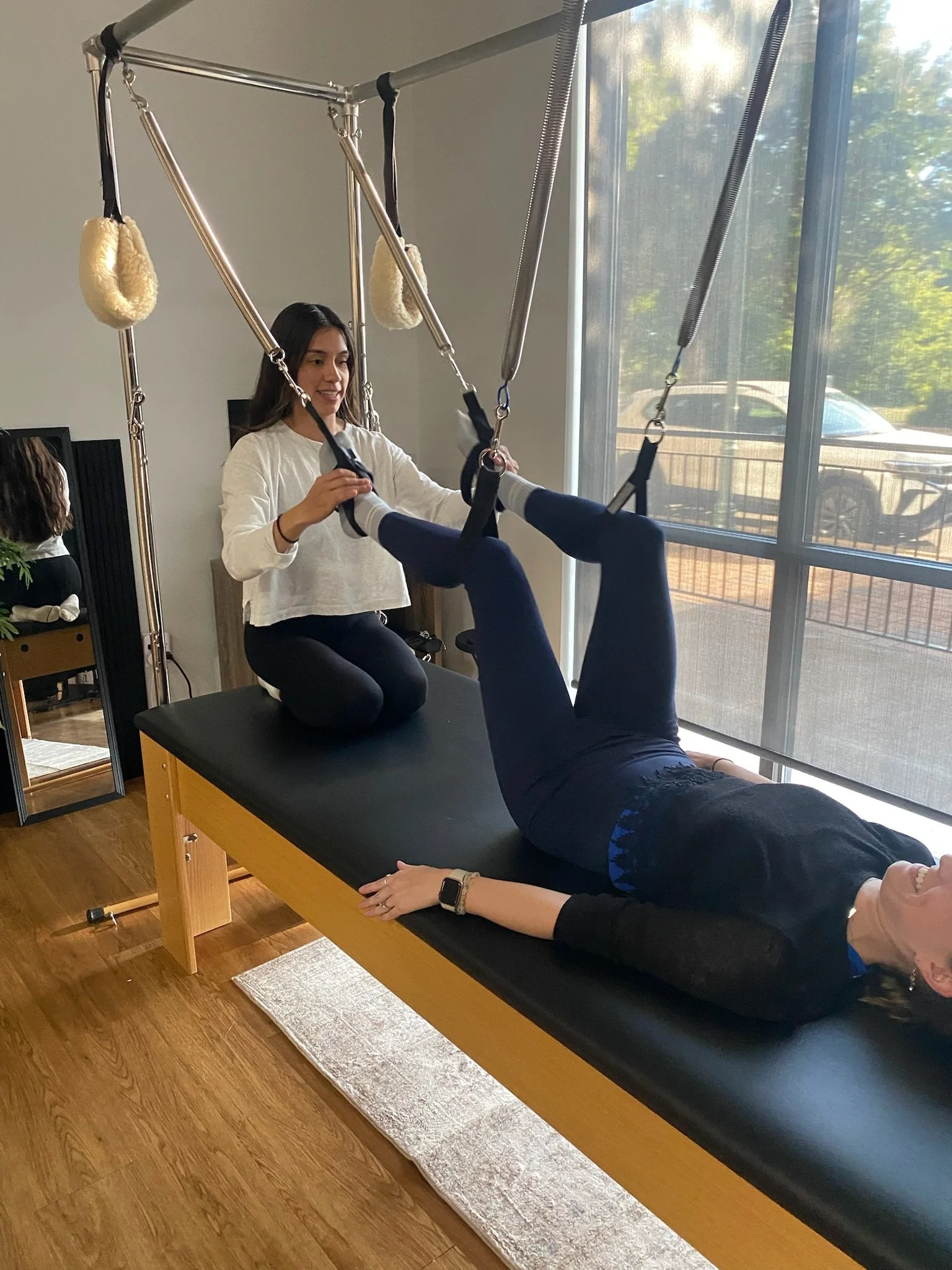
Explore how suspension can assist movement, reduce load, and expand access for patients with limited strength and stability.
Clinical reasoning for using suspension in neuro patients/clients.
Spring tension selection and placement/line of pull to best support different positions, like quadruped and bridging.
How to set up Leg Springs for each body - my 5 step process to individualize this set up.
+ 50 min Pilates class for yourself, featuring Mat Pilates with props to replicate equipment (great for HEP ideas!)
5️⃣ Reformer, part 2: Lower extremity integration
Use the Reformer to gently introduce and then challenge lower extremity loading.
Progressions on Footwork (‘leg press’) and other exercises for ambulatory patients/clients.
Use of the Reformer for supported stretching and tone management.
Effective use of spring settings: support vs. resistance.
+ 50 min Pilates class for yourself, featuring standing and more advanced exercises - potentially for your ambulatory cases.
Modules 2-5 showcase:
Live demo and breakdown of key exercises with Participant Practice.
Clinical reasoning for each exercise (who it’s for, how to modify).
Common compensations and how to adjust setup to improve outcomes.
Client case examples and discussion.